
AD-INTERIM COMMITTEE ON ORDINATION STANDARDS

The Interim Committee on Ordination Standards report to the 46th General Assembly of its work during 2025-2026, plus recommendations for consideration by the Assembly.
Use these quick links to navigate to a specific section of this report:
Summary of Work
Summary of Recommendations
Work of the Committee
Recommendations (Detailed)
Committee Members
Meeting Dates

Doug Resler
Co-Chairman
TE, Presbytery of the West

Julie Hawkins
Co-Chairman
TE, Presbytery of the Pacific Northwest
SUMMARY OF WORK
1. We focused on evaluating and proposing revisions to our current ordination standards to provide a clearer path to a more effective bar for Teaching Elders in the EPC.
2. We met multiple times online and in person to discuss our current standards, evaluate strengths and weaknesses, and develop an ordination framework that includes a new uniform curriculum standard for all candidates, requires more significant relational investment by the ascending courts of the church in our candidates, and provides flexibility for both candidate and presbytery to tailor the process to fit their specific context and needs.
RECOMMENDATIONS
46-12 Recommends that the 46th General Assembly approve revisions to G. 11-2.G.
46-14 Recommends that the 46th General Assembly approve the insertion of a new Book of Government 11-2.H and renumber 11-2 depending on the outcome of the descending overtures from the 45th General Assembly.
46-16 Recommends that the 46th General Assembly approve revisions to G. 12-2
46-18 Recommends that the 46th General Assembly approve the Criteria for Ordination Requirements and Education.
46-19 Recommends that the 46th General Assembly approve a sunset provision for the Candidate’s Educational Equivalency Program (CEEP).
46-20 Recommends that the 46th General Assembly direct the National Leadership Team (NLT) to conduct a thorough review of the Ministerial Vocation Committee’s job description and respective responsibilities and bring potential revisions to the 47th General Assembly.
46-21 Recommends that the 46th General Assembly approve the amendment of the Rules for Assembly 10-1.C.
46-22 Recommends that the 46th General Assembly direct the Ministerial Vocation Committee (MVC) to conduct a thorough study of licensure as a potential category in the denomination’s credentialing process, report back to the 47th General Assembly regarding the theological, constitutional, and pastoral implications, and present any recommendations.
46-23 Recommends that the 46th General Assembly direct the National Leadership Team to review the function and purpose of the Acts of Assembly and consider archiving those no longer in effect.
46-24 Recommends that the 46th General Assembly dismiss with mild gratitude the Ad-Interim Committee on Ordination Standards – saecula saeculorum. Amen.
WORK OF THE COMMITTEE
The 43rd General Assembly of the Evangelical Presbyterian Church voted to create an Ad-Interim, Moderator-appointed Committee on Ordination Standards. The purpose of the committee was to review the current processes and standards related to the ordination of Teaching Elders in the EPC. In an era of growing skepticism and significant change in traditional theological education, the goal was to evaluate the effectiveness of the current model in preparing and equipping men and women from different backgrounds and life experiences to meet the demands of pastoral ministry in the 21st century, North American and Caribbean context and recommend any potential changes to a future General Assembly.
Our committee has met for three years. The first year was dedicated to listening and soliciting as much feedback as possible on our current ordination process and standards from all Teaching and Ruling Elders. We used tools like denomination-wide emails, surveys of current Teaching Elders, a General Assembly Networking lunch, and many informal conversations across the EPC to gather as much data as possible on the effectiveness of our current ordination process and standards. Our desire for this process was to be as open and transparent as possible and make sure every voice was heard and everyone felt valued.
Our second year was dedicated to reviewing, evaluating, and revising our current ordination process. At the 45th General Assembly, we presented a number of recommendations to our process that included proposed changes to the Book of Government, Acts of Assembly, Rules of Assembly, and the Ministerial Committee Procedure Manual. The guiding philosophy behind our recommendations was to “seek a clearer path to a more effective bar.” To that end, we sought to bring clarity, consistency, and efficiency to our process while maintaining respect for the different courts of the church and the need for robust national standards. By God’s grace, the 45th General Assembly approved our recommendations and the 46th General Assembly will be asked to ratify the changes to our Book of Government.
Our third year has been spent evaluating and reviewing our current ordination standards. Using the data gathered from surveys and conversations with Teaching Elders and Ruling Elders across the EPC, as well as conversations with many of our seminary partners, we recognized the need to maintain a robust academic standard while at the same time developing more effective assessments for character development and organizational leadership competencies. We acknowledge the challenge of maintaining the rigor of academic standards in a culture where the Master of Divinity degree is no longer standardized across many of our seminaries. Indeed, it is a completely different degree in some cases. We also acknowledge that while the seminary does an excellent job providing the academic preparation necessary to serve as a Teaching Elder, particularly in the areas of Bible and Theology, it is not the best place to assess the character and spiritual formation of a candidate. We believe this is better done at the local church level in partnership with the presbytery. Finally, we also acknowledge the need for our Teaching Elders to gain significant skills in organizational leadership, our greatest deficit according to survey results, and we believe these are best gained through practical experience (residency, internship, employment, etc.) in a local church.
To this end, our recommendations include significant changes to the Book of Government, particularly in chapters eleven and twelve. They establish a uniform curriculum standard for all candidates, thus eliminating the need for the Candidates Educational Equivalency Program (CEEP), and re-introduce the requirement of original languages. They eliminate the Master of Divinity degree as a standard in favor of a graduate theological degree from an accredited seminary. They mandate the development of an EPC-wide character assessment process for candidates and spouses modeled after our current, very successful, assessments for church planters and world outreach workers. And they provide the Presbyteries flexibility, working with Candidates and local church Sessions, to assess organizational leadership competencies.
Further, we ask the General Assembly to direct the National Leadership Team to review the current makeup and responsibilities of the Ministerial Vocation Committee to refine their work so they may better serve our Presbyteries and Candidates in this process. We also ask the General Assembly to direct the Ministerial Vocation Committee to conduct a thorough study of licensure as a potential category in the credentialing process and report back to the 47th General Assembly with recommendations. Finally, we ask the General Assembly to direct the National Leadership Team to review the function and purpose of the Acts of Assembly and consider archiving those no longer in effect as it often adds confusion to our ordination process.
RECOMMENDATIONS (DETAILED)
RECOMMENDATION 46-12
The Ad-Interim Committee on Ordination Standards and Process recommends that the 46th General Assembly approve revisions to the Book of Government 11-2.G.
We are recommending the elimination of the Master of Divinity degree as a standard due to the significant changes the degree has undergone at many seminaries across the country. There is no “standard” MDiv any longer therefore we should not rely on it as a standard. Instead, we are proposing all candidates earn a graduate theological degree from an accredited seminary subject to the approval of the Presbytery.
Rationale:
Due to changes in the accreditation of the Masters of Divinity degree over the years, the degree is no longer standard among seminaries. Some seminaries still maintain the traditional 90+ credit hour degree while others have reduced the required credit hours to the minimum 72+ credit hour threshold. This results in a significant variance when it comes to the preparation and training of our Candidates. Furthermore, we have many Candidates who have already achieved a graduate level theological degree and simply need to add a few more classes rather than pursue a different degree. Additionally, we recognize the need for a uniform standard which is why we are proposing a standard “Criteria for Ordination Requirements and Education” that all Candidates must meet. The new criteria will include 72 hours of transcripted, graduate level coursework, including original languages. It will also include a new assessment process for Candidates modeled after our current church planter and world outreach worker assessments. Finally, it will include some kind of demonstration of pastoral competencies and skills in a local ministry context.
RECOMMENDATION 46-14
The Ad-Interim Committee on Ordination Standards and Process recommends that the 46th General Assembly to approve the insertion of a new Book of Government 11-2.H and renumber 11-2 depending on the outcome of the descending overtures from the 45th General Assembly.
This recommendation creates a new uniform standard for ordination that includes 72 hours of transcripted, graduate level coursework in addition to a candidate assessment to be created by the EPC, modeled after the successful assessments we conduct for church planters and world outreach workers, and the demonstration of practical, pastoral and organizational leadership competencies. The Candidate shall present evidence of satisfactory completion to their Presbytery for approval.
Rationale:
Due to changes in the accreditation of the Masters of Divinity degree over the years, the degree is no longer standard among seminaries. Some seminaries still maintain the traditional 90+ credit hour degree while others have reduced the required credit hours to the minimum 72+ credit hour threshold. This results in a significant variance when it comes to the preparation and training of our Candidates. Furthermore, we have many Candidates who have already achieved a graduate level theological degree and simply need to add a few more classes rather than pursue a different degree. Additionally, we recognize the need for a uniform standard which is why we are proposing a standard “Criteria for Ordination Requirements and Education” that all Candidates must meet. The new criteria will include 72 hours of transcripted, graduate level coursework, including original languages. It will also include a new assessment process for Candidates modeled after our current church planter and world outreach worker assessments. Finally, it will include some kind of demonstration of pastoral competencies and skills in a local ministry context.
RECOMMENDATION 46-16
The Ad-Interim Committee on Ordination Standards and Process recommends that the 46th General Assembly approve revisions to the Book of Government 12-2.
This recommendation clarifies the process of examination for a candidate for Teaching Elder in the EPC. It includes the current national EPC written exams but eliminates the exegesis exam as we believe a passing grade from an accredited seminary in original languages demonstrates sufficient competency. It further clarifies the examinations before the appropriate committee, as well as the floor of the Presbytery, listing the requirements for each in greater detail for the sake of greater clarity in the hopes it also leads to greater trust and collaboration between Presbyteries as Candidates and Teaching Elders transfer.
Rationale:
Due to the confusion that often surrounds our examination process at the Presbytery level, we believe it important to clarify in detail what the EPC requires. Much of what is listed here is already found in various places such as the Procedure Manual for Ministerial and Candidates Committees, but we believe the expectations are best spelled out in the Book of Government for the sake of consistency and clarity across presbyteries. One important change to note is the elimination of the written exegesis exam. Should our recommendations pass, we believe a passing grade in Biblical Languages and Biblical Exegesis from an accredited seminary is sufficient to meet our standard.
RECOMMENDATION 46-18
The Ad-Interim Committee on Ordination Standards and Process recommends that the 46th General Assembly approve the Criteria for Ordination Requirements and Education.
In light of the changes to the Master of Divinity degree in recent years and the continued difficulty in assessing the candidates under the Candidates Educational Equivalency Program (CEEP), we believe a uniform standard should be required for all candidates. It should include transcripted, graduate level theological coursework focused mainly in the areas of Bible and Theology which is where our seminaries excel. At the same time, we recognize preparation for the office of Teaching Elder is not simply an academic exercise but should also require robust character and leadership assessments. We believe the current assessments conducted for our church planters and world outreach workers offer a compelling example for our candidates and we believe the local church must be a significant partner in these assessments as well. We affirm the need for practical skill development, especially when it comes to organizational leadership, and believe these skills are best gained in the field at a local church. The bottom line is our local church is our pipeline to equip men and women for the office of Teaching Elder.
Rationale:
Because of the changes to the Master of Divinity degree, we believe the EPC needs to create her own standard. To that end, we are proposing the following standard criteria for all Candidates that includes academic coursework, character assessment, and field work in a local church and/or ministry setting where Candidates can learn organizational leadership and pastoral skills. Please note our current Candidate’s Educational Equivalency Program requires 66 credit hours of graduate level work with 12 hours in Old Testament, New Testament, and Theology respectively (Biblical Languages optional). Our new standard requires 72 credit hours of graduate level work with 18 hours in Old Testament and New Testament respectively (Biblical Languages required), and 24 hours in Theology with an emphasis on Covenant and Reformed Theology. We also believe courses in Homiletics and Pastoral Care and Counseling are also essential for those seeking to be ordained to the office of Teaching Elder. Additionally, we believe the denomination should create an assessment weekend modeled after the church planter and world outreach assessments for our Candidates. Finally, we believe strongly that the local church is the best pipeline to train and equip future Teaching Elders in the necessary organizational leadership and pastoral skills.
RECOMMENDATION 46-19
The Ad-Interim Committee on Ordination Standards and Process recommends that the 46th General Assembly approve a sunset provision for the Candidate’s Educational Equivalency Program (CEEP).
We recognize the need to create a “sunset clause” for our current Candidate’s Educational Equivalency Program (CEEP). We don’t want to create an undue burden for those who are already in the process but at the same time do want to designate an end date for the program. We believe three years from the potential effective date (summer of 2027) is sufficient time for anyone currently under the CEEP program to complete their work.
Rationale:
The Criteria for Ordination Requirements and Education will eliminate the need for the Candidate’s Educational Equivalency Program (CEEP) as it provides a uniform standard for all Candidates to meet while providing the Presbytery some measure of flexibility in order to customize the standard to each individual Candidate and their background. At the same time, the committee recognizes the need to provide some time for Candidates currently under care in the CEEP process to complete their work. We believe three years from the effective date (47th General Assembly) is sufficient.
RECOMMENDATION 46-20
The Ad-Interim Committee on Ordination Standards and Process recommends that the 46th General Assembly direct the National Leadership Team (NLT) to conduct a thorough review of the Ministerial Vocation Committee’s job description and respective responsibilities and bring potential revisions to the 47th General Assembly.
We believe a review of the Ministerial Vocation Committee’s work load and responsibilities is long overdue, especially in light of the changes we’ve proposed. We believe the NLT has the opportunity to clarify and refine their work so they may more effectively serve our presbyteries and denomination.
Rationale:
The growth of the EPC in recent years necessitates a review of the committee’s responsibilities to make sure they best serve the purpose for which the committee was originally formed. The size and scale of the EPC has dramatically increased since the Ministerial Vocation Committee was first constituted and we believe the makeup as well as the responsibilities of the committee may need to be revised in order to best serve our denomination in the future.
RECOMMENDATION 46-21
The Ad-Interim Committee on Ordination Standards and Process recommends that the 46th General Assembly approve amendment to the Rules for Assembly 10-1.C.
Offered to further simplify and clarify the role of the Ministerial Vocation Committee should the proposed changes to The Book of Government pass.
Rationale:
The only role the Ministerial Vocation Committee plays in assisting in the placement of pastors and helping churches find pastors is to oversee the Opportunities List with the assistance of the Office of the General Assembly as well as facilitate time during General Assembly for churches searching for pastors to make their needs known. We believe the language in the Rules of Assembly should reflect this reality so as to avoid creating unrealistic expectations.
RECOMMENDATION 46-22
The Ad-Interim Committee on Ordination Standards and Process recommends that the 46th General Assembly direct the Ministerial Vocation Committee (MVC) to conduct a thorough study of licensure as a potential category in the denomination’s credentialing process, report back to the 47th General Assembly regarding the theological, constitutional, and pastoral implications, and present any recommendations.
In our work, we held significant discussions over the issue of licensure, recognizing sister denominations employ this category with great effectiveness. It is also part of the EPC’s history as it relates to the preparation of candidates. While we didn’t feel we had enough time to bring forth any recommendations, we do believe further study is warranted and members of our committee are willing to help the MVC in their study.
Rationale:
There is a history of licensure in the EPC. Though it was eliminated in 1984, we believe it is worth considering bringing back as a regular practice. Many of our sister denominations use licensure to great effect in the training and equipping of their Candidates and it also provides presbytery endorsement for Candidates to preach the Word within their bounds. The EPC’s lack of licensure or a similar category has resulted in a limited pool of presbytery-endorsed preachers which potentially results in local churches not being well-served in the ministry of the Word. We also believe it could potentially impact the training and equipping of Commissioned Pastors. Members of our committee are willing to assist the MVC in this study.
RECOMMENDATION 46-23
The Ad-Interim Committee on Ordination Standards and Process recommends that the 46th General Assembly direct the National Leadership Team to review the function and purpose of the Acts of Assembly and consider archiving those no longer in effect.
We believe this recommendation is long overdue as the Acts of Assembly are difficult to navigate thus creating confusion not only in the ordination process but also in other areas. Members of our team are willing to help the NLT in this effort to re-organize them and present them in a clearer, simpler format.
Rationale:
The Acts of Assembly, as they are currently organized, are difficult to navigate, creating confusion over which provisions are in effect. We believe it is worth reviewing and revising the Acts of Assembly with the goal of re-organizing them into a clearer, more functional format and archiving those no longer in effect to eliminate any confusion. Members of our committee are willing to assist the NLT in this work.
RECOMMENDATION 46-24
The Ad-Interim Committee on Ordination Standards and Process recommends that the 46th General Assembly dismiss with mild gratitude the Ad-Interim Committee on Ordination Standards – saecula saeculorum. Amen.
Rationale:
We believe our work is concluded.
COMMITTEE MEMBERS
Doug Resler (Chairman)
TE, Presbytery of the West
Chris Danusiar
RE, Presbytery of Rivers and Lakes
Aron Gibson
TE, Presbytery of the Central Carolinas
Terrence Gray
TE, Presbytery of the Midwest
Zach Hopkins
TE, Presbytery of the Rivers and Lakes
Julie Hawkins (Co-Chairman)
TE, Presbytery of the Pacific Northwest
Annie Rose
TE, Presbytery of the Rivers and Lakes
Matt Koehn
TE, Presbytery of the Southeast
Meagan Kroeker
TE, Presbytery of the Pacific Southwest
Fred Lian
TE, Presbytery of the West
MEETING DATES
August 20, 2025: Video Conference
September 14-15, 2025: Office of the General Assembly (Orlando, FL)
November 19, 2025: Video Conference
January 21, 2026: Video Conference
February 18, 2026: Video Conference
March 1-2, 2026: Office of the General Assembly (Orlando, FL)
May 20, 2026: Video Conference
Respectfully submitted,
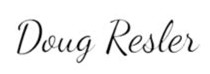
Doug Resler, Co-Chairman
June 2026

Julie Hawkins, Co-Chairman
June 2026
Follow Us

Office of the General Assembly
5850 T.G. Lee Blvd., Suite 510
Orlando, FL 32822
(407) 930-4239
(407) 930-4247 fax
info@epc.org